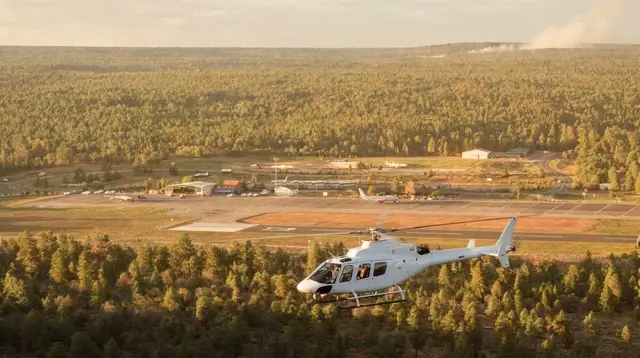
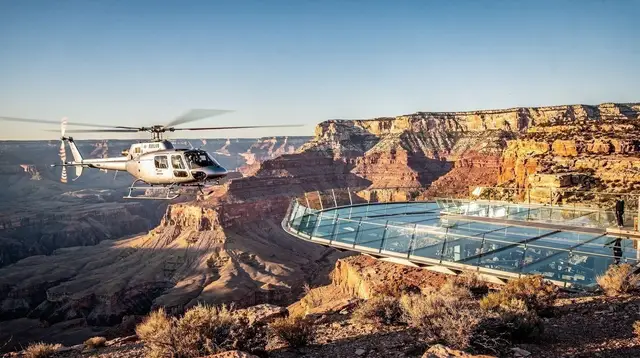
Grand Canyon champagne landing tours
What is a Grand Canyon champagne landing?
A Grand Canyon West helicopter tour from Las Vegas that lands below the rim and serves champagne (or a soft drink) during the stop, usually with a light snack. The flight is the same as a standard landing tour; the toast makes it a popular choice for anniversaries, proposals and birthdays.
The landing, with a toast
A champagne landing is a Grand Canyon West landing tour with a glass in your hand. You fly from Las Vegas over Lake Mead, land below the rim, and toast with the canyon walls around you.
The Grand Canyon helicopter tour with landing and champagne is the reference listing.
The idea is simple, and so is the product. There is no special route and no special aircraft: it is the standard West Rim landing flight with a drink added to the stop. That matters when you compare listings, because the toast is the only part that changes. Everything else you would check on any landing tour still applies: flight time, time on the ground, pickup, weight rules and what the price includes.
What the toast is, and what it is not
It helps to be clear about what you are paying for, so that the day matches your expectations.
- It is a small ceremony. A glass of champagne, or a soft drink, at the spot where the helicopter has set down, with a view most visitors never get.
- It is not a meal. Some listings mention a light snack. Do not expect a picnic, a table or a long sit-down.
- It is not a separate flight. The aircraft, the route and the pilot are those of the landing tour. If a listing promises something different, read what exactly is included.
- It is not guaranteed to be champagne in the strict sense. Listings describe the drink in their own words. Read the inclusions if the exact drink matters to you.
- It is not a reason to relax the rules. Safety briefings, seating and instructions on the ground apply as on any other flight, and they come before the toast.
What the day looks like
Operators differ, so treat this as the usual shape of the day rather than a script. Your listing has the exact timings.
- Check-in. You arrive at the departure point named in your confirmation, usually earlier than the flight itself. Weights may be asked for when seats are assigned. See what check-in is really like.
- The flight out. A flight from Las Vegas to Grand Canyon West takes about 45 minutes one way. You pass over the edge of the city, then Lake Mead and the desert, and the ground drops away into the canyon as you approach.
- The landing. The helicopter sets down below the rim, on Hualapai tribal land. This is the part you cannot get from a flight that stays above the canyon.
- The toast. Champagne or a soft drink, often with a light snack, for a stop of typically around 20 to 30 minutes on the ground.
- The flight back. Another flight of about 45 minutes to Las Vegas, with a different angle on the same landscape.
Plan the rest of your day around the total, not only the flight. With check-in, boarding, the stop and the transfer back, the experience takes a good part of a half day.
How to use the time on the ground
A stop of 20 to 30 minutes goes quickly. A short plan keeps the toast from eating the whole stop.
- Look first, then drink. Take in the view and take your photographs while the group is gathering. The glass can wait a minute.
- Pick your photographs. One of the whole group, one of the couple or the person being celebrated, one of the view without anyone in it. That is plenty.
- Keep one hand free. A glass in one hand and a phone in the other leaves nothing for the wind. Ask someone else in the group, or the pilot if they offer, to take the group shot.
- Keep to the area the pilot allows. You are on tribal land and on an operator’s landing area. Follow the instructions you are given about where to stand and walk.
- Leave a minute at the end. Boarding is orderly and the pilot sets the pace. Do not start a long conversation when the call to board comes.
Who it suits
- Anniversaries and birthdays. The toast gives the stop a purpose, so the landing feels like an occasion rather than a photo stop.
- Proposals: tell the operator in advance so the pilot can give you a moment. Do not rely on being able to arrange it at the landing itself.
- Vow renewals, without the paperwork of a wedding. See our wedding guide.
- Couples who want one big moment. If you will do only one flight on the trip, a landing with a toast is a clear, memorable choice.
- Small groups celebrating together. A shared toast works for friends as well as couples, as long as everyone is of legal drinking age or takes the non-alcoholic option.
Who may prefer something else
- Travellers who dislike drinking or are driving afterwards. The toast is a small pour, but if it does not appeal, a standard landing tour gives you the same flight. Operators usually offer a non-alcoholic option anyway.
- Anyone prone to motion sickness. The landing flight is long compared with a Strip flight. Read our motion sickness tips before you book, and think about whether a drink on arrival suits you.
- Travellers who want a night-time celebration. A night flight over the Strip is a different experience, shorter and with no landing. See the Strip night helicopter flight.
- Anyone who wants the whole canyon from the air. The landing is about being on the ground. If you want a long view, compare it with the standard Grand Canyon helicopter tour.
Compared with the alternatives
- Standard landing tour: the same flight, sometimes with a drink too; compare inclusions.
- Bigger day: the 6-in-1 Grand Canyon West tour with a helicopter landing adds stops on the ground.
- Fully private: see private helicopter tours.
A quick way to choose:
| If you want | Look at |
|---|---|
| A landing with a toast, nothing more | The champagne landing listing |
| The landing at the lowest complexity | A standard West Rim landing tour |
| More time and more stops at Grand Canyon West | The 6-in-1 tour with a helicopter landing |
| A flight only for your party | A private charter |
| A boat ride or the Skywalk on top | A combo tour |
For the combos, see helicopter, boat and Skywalk combo tours and our verdict on whether the Skywalk is worth adding. If you are still deciding whether to land at all, read is the Grand Canyon landing worth it.
How to read two listings side by side
Two listings that look alike can differ in ways that matter on the day. When you compare a champagne landing with a standard landing, go through the same short list for each.
| Check | Why it matters |
|---|---|
| Does the helicopter land below the rim? | Some canyon flights stay in the air. The landing is the point of this product. |
| What is served, and is a non-alcoholic option offered? | The drink is the only real difference between the two products. |
| Time on the ground | The usual stop is around 20 to 30 minutes, but the listing is the reference. |
| Pickup or meeting point | It changes how much of the morning the tour takes. |
| Weight and seating conditions | The policy is the operator’s and can add cost or change seats. |
| Cancellation terms | A landing is more sensitive to conditions than a flight that stays up. |
| Group size and private option | A shared aircraft and a private one are different days. |
If the two listings match on every line except the drink, the choice is about whether you want the toast. If they differ elsewhere, the other differences usually matter more than the glass.
Which landing is the right one
Only some Grand Canyon flights land, and the name of the canyon does not tell you which. Keep these facts straight when you compare:
- West Rim. Grand Canyon West sits on Hualapai tribal land, not in the national park, and only West Rim flights can land below the rim. This is where the champagne landing happens.
- South Rim. South Rim helicopter flights depart from Tusayan in Arizona, not from Las Vegas. They are a different trip, covered in our South Rim helicopter tour guide and the South Rim destination page.
- Airplane tours. Small planes fly over the canyon but do not land below the rim. See Grand Canyon airplane tours and helicopter vs airplane vs bus.
For the place itself, see Grand Canyon West.
Choosing the seat
The seat affects what you see, and on a celebration flight it affects the photographs too. Seats are usually assigned by the operator, often with weight and balance in mind, so you may not be able to pick. Where a front seat is offered, our front seat verdict explains when it is worth asking for. Weight rules differ by operator, and a heavier passenger may be asked to pay for an extra seat. Read weight limits and seating before you book and check the conditions of the product, since the policy is the operator’s.
If you are celebrating as a couple, ask whether you can sit together and which side of the aircraft you will be on. Do not count on a particular side: the operator decides, and the view is good from every seat.
What to wear and bring
You will be sitting in the aircraft, then standing on the canyon floor. Dress for the ground, not for the lobby.
- Shoes you can stand in. The landing area is outdoors, and a stop of 20 to 30 minutes on the ground is easier in flat, closed shoes.
- Sun protection. The canyon floor is hot from spring to autumn: hat, sunglasses and sunscreen.
- Layers. It can feel different in the air and on the ground, and early flights can be cooler than the afternoon.
- Loose items. Hats and scarves can blow off near the rotors. Follow the pilot’s instructions on the ground.
Our what to wear on a helicopter tour guide has the detail, and the photography tips cover phones, cameras and window glare.
Booking and timing
The toast changes nothing about how a landing tour is booked. Choose the day first, then the slot.
- Pick the date with the weather in mind. A flight can be cancelled for wind or other conditions, and a landing is more sensitive than a flight that stays up. Read the cancellation and weather policy and keep a spare day if you can. Our note on when wind cancels your flight shows what usually happens.
- Choose the season with care. Summer is hot on the canyon floor, and winter can be cooler. See the best time for a Las Vegas helicopter flight.
- Read the inclusions. Confirm that the drink is part of the tour, what the snack is, and whether pickup is included. Do not assume.
- Prices. For a guide to what a flight costs and what the quoted price may leave out, see Las Vegas helicopter tour cost. We do not quote a price here: check the listing for the current one.
For a wider look at the options, compare the Las Vegas helicopter tours or browse the landing tours category.
Questions to ask before you pay
If anything on the listing is unclear, ask the operator through the contact route in your confirmation, or read the terms again before you book. These are the questions that most often change the plan:
- Is the landing on the ground below the rim part of this tour, or is it a flight that stays in the air?
- What exactly is served at the stop, and what is the option for someone who does not drink?
- Is pickup included, and from where?
- What are the weight and seating conditions, and could they add a charge?
- What happens if the flight is cancelled or delayed: refund, new date, or both?
- Can a surprise or a proposal be arranged, and how far ahead should I say so?
Planning a proposal or a surprise
A proposal on a tour needs more planning than a toast.
- Tell the operator before the day. Use the contact route in your confirmation. A pilot who knows can time the moment.
- Keep the ring safe. Hold it in a closed pocket. Wind and rotor noise on the ground are not the place to fumble a small box.
- Plan the photograph. Decide who takes it and where you want to stand. Agree on a signal.
- Do not promise yourself a fixed time. The schedule on the ground is the operator’s.
- Have a plan B. If the flight is cancelled, you still have the proposal and need another setting.
If the occasion is a wedding, a vow renewal or a ceremony of any kind, our helicopter wedding guide covers what is different.
If the surprise is for someone else
When one person organises and the other does not know, a few extra points keep the secret and the day on track.
- Share only what the guest needs. The pickup time and the dress advice are enough. The name of the tour can stay private.
- Make sure the guest is able to fly. Weight rules, motion sickness and a fear of heights are worth a quiet check before you book. A celebration works badly if the person cannot enjoy the flight.
- Think about the drink. If the guest does not drink, tell the operator in advance so that a good non-alcoholic option is ready.
- Do not hide the dress code. A surprise is spoilt by the wrong shoes. A line such as “wear comfortable closed shoes and bring a hat” is enough.
Common mistakes
- Booking the toast without checking the landing. Some flights over the canyon do not land. Make sure the listing says the helicopter lands below the rim.
- Assuming champagne means a long stop. A stop of typically around 20 to 30 minutes is the norm for a landing tour. Do not plan a long picnic.
- Forgetting ID and age. Passengers must be of legal drinking age to be served alcohol. If someone in the party is under the age, they get the non-alcoholic option.
- Skipping the weight rules. The operator may reassign seats or ask about weight. Telling the truth at booking avoids trouble at check-in.
- Dressing for the hotel. Heels and thin shoes make the landing harder than it needs to be.
- Booking on the last evening. A cancelled flight with no spare day means no champagne landing. See mistakes when booking a Las Vegas helicopter tour.
- Tipping confusion. If you are unsure what is expected, read our note on tipping your helicopter pilot.
- Planning a tight evening afterwards. The tour takes a good part of a half day, and a delay is possible. Leave room before a dinner reservation or a show.
Practical notes
Passengers must be of legal drinking age to be served alcohol. Bring sun protection: the canyon floor is hot from spring to autumn.
A few more habits help on the day:
- Eat lightly before the flight. A light meal helps with motion and with a drink on arrival. Heavy food is a poor idea before a long flight.
- Drink water. The desert is dry, and a small glass of champagne is not hydration.
- Charge your phone. You will want it for photographs and for the return transfer.
- Arrive early. Check-in is not a place to hurry.
- Keep your confirmation handy. The departure point and contact details are on it.
- Pack light. Space in the aircraft is limited, and loose bags are a nuisance on the ground. Leave anything you do not need at the hotel.
Where to go next
A champagne landing can sit inside a longer plan. If you have one day, see one day in Las Vegas with a Grand Canyon flight. If you have three, three days of flights and the Strip leaves room for a second flight. For other flight types, browse all things to do and the special occasions category.
Frequently asked questions about Grand Canyon champagne landing tours
How long is the champagne stop? Typically around 20 to 30 minutes on the ground, as on other landing tours. Check the listing.
Is there an alternative for non-drinkers? Operators usually offer a non-alcoholic option. Passengers must be of legal drinking age to be served alcohol.
Can I land at the South Rim and have champagne there? No. Only West Rim flights can land below the rim, and Grand Canyon West is on Hualapai tribal land, not in the national park. South Rim helicopter flights depart from Tusayan in Arizona, not from Las Vegas, and they do not land in the canyon.
Is the champagne landing a different flight from a standard landing tour? No. The route, the aircraft and the time on the ground are usually the same. What changes is the toast, and sometimes a snack. Compare the inclusions of each listing rather than assuming one is better.
Can I bring my own bottle? Do not plan on it. Drinks are normally part of the tour, served by the operator at the landing. If you want something specific, ask the operator before the day.
Is the champagne landing worth it if I do not drink? Only if the landing itself appeals to you. The flight and the stop below the rim are the same as on a standard landing tour, and the toast can be a soft drink. If the drink is the whole point, a plain landing tour may suit you better.
What happens if the flight is cancelled for weather? A cancelled flight means no landing and no toast. The remedy, usually a refund or a new date, depends on the operator and the listing, so read the cancellation terms before you book and keep a spare day in your trip.
Flights with a canyon landing
Verified deep-linked GetYourGuide tours. Book through these links and we earn a small commission at no cost to you.
GetYourGuide does not provide a product photo for this activity — the image shows the meeting point, photographed by us.