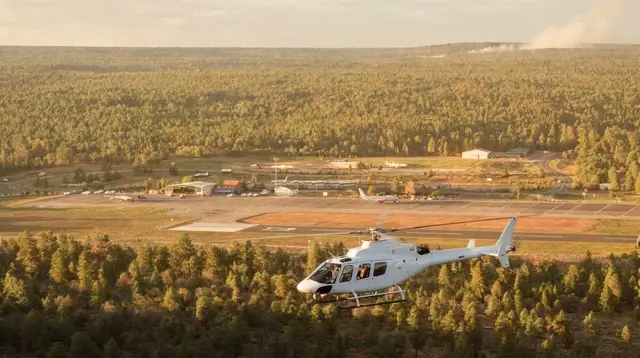
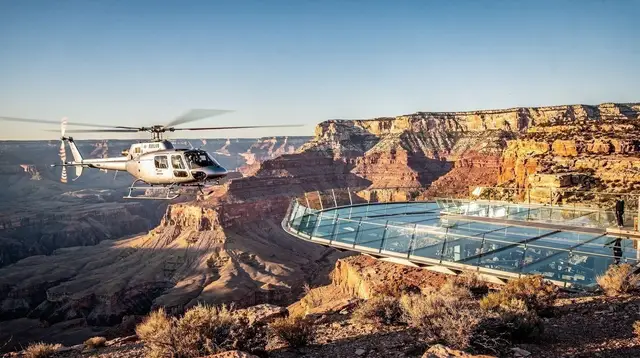
Valley of Fire helicopter landing
Can you land in the Valley of Fire by helicopter?
Yes. Tours from Las Vegas fly northeast to the red sandstone of the Valley of Fire area and land in the desert, with time on the ground before flying back. An exclusive sunset version is sold as a private experience. It is shorter than a Grand Canyon trip and closer to the city.
A landing without the long day
The Grand Canyon landing takes half a day. The Valley of Fire landing gives you a desert landing among red sandstone in much less time, close to Las Vegas. Nevada’s oldest state park and the rock around it turn deep orange at the end of the day.
That makes it the landing tour that fits most easily into a Las Vegas schedule. You do not need to clear a whole morning, you do not cross the Hualapai reservation, and you do not plan around a long flight each way. If you have only one free evening and want something more memorable than the Strip from above, this is the flight to look at first.
Who it suits
The Valley of Fire landing is a good match if you:
- want to set foot on red desert rock, not only look at it through a window;
- have a short stay and cannot give a half day to a Grand Canyon trip;
- care about light and photographs more than about a famous landmark;
- are planning a proposal, an anniversary or another private moment (the exclusive sunset version);
- have already done a Strip flight and want something quieter.
It suits you less if the Grand Canyon is the whole point of your trip. In that case read the Grand Canyon West helicopter landing guide and the broader Grand Canyon helicopter tour from Las Vegas page instead. The two trips are not interchangeable: one is a canyon, the other is a field of sandstone formations in the desert.
Who should think twice
A few travellers will be happier with a different flight:
- Anyone who wants a headline landmark. The Valley of Fire is about colour, shape and quiet. If you want a famous name to say you have seen, the Grand Canyon or Hoover Dam will give you that more directly.
- Travellers who dislike heat and exposure. There is little shade on the ground. A short landing is easy for most people, but it is still a desert.
- People who want a lot of time on the ground. A landing is a pause in a flight, not a hike. If you want to walk trails, a ground visit is a better fit than a helicopter.
- Anyone who wants the city lights. For that, the Las Vegas Strip night helicopter flight is the right product.
The two versions
- Scenic landing. The Valley of Fire scenic helicopter landing experience: a flight over the desert, a landing, time on the ground, and the flight back.
- Exclusive sunset landing. The exclusive sunset landing: private, timed for golden hour. See private helicopter tours.
How they differ
| Scenic landing | Exclusive sunset landing | |
|---|---|---|
| Format | Shared flight, desert landing | Private experience |
| Timing | Set by the operator’s schedule | Built around golden hour |
| Best for | Seeing the rock and standing in it | Proposals, couples, photographers |
| Main risk | Midday glare and heat | Evening wind and sold-out slots |
Treat the table as a guide to the type of trip, not as a quote. Group size, flight length, time on the ground and what is included change from one listing to another, so read the tour page before you pay. If you are comparing the full range of flights, the Las Vegas helicopter tours compared page puts the types side by side.
Choosing between them
Start from the reason you are flying. If the point is simply to stand among the red rock and see it from the air, the scenic landing does that in the plainest format. If the point is an occasion, a particular quality of light, or privacy, the exclusive sunset landing is built for it. If you are undecided, ask yourself one question: would you be disappointed if other people were on the ground with you? If yes, look at the exclusive version. If not, the scenic one is usually enough.
Valley of Fire or Grand Canyon West?
Many travellers weigh these two landings against each other. They answer different wishes, so a side by side view helps.
| Valley of Fire landing | Grand Canyon West landing | |
|---|---|---|
| Landscape | Red and orange sandstone formations in open desert | A canyon, with a landing below the rim |
| Where | About 50 miles (80 km) northeast of Las Vegas | On Hualapai tribal land, not in the national park |
| Flight from Las Vegas | Much shorter than the drive | About 45 minutes one way |
| Size of the outing | Fits into an evening | A longer outing |
| Draw | Colour, light and quiet | Scale and the canyon itself |
If you cannot decide, the Grand Canyon is the bigger sight and the Valley of Fire is the easier one to fit in. The two are not mutually exclusive on a longer stay; the three-day plan shows how flights can be spread out.
How the day runs
Exact schedules depend on the operator, but a landing tour from Las Vegas follows the same pattern:
- Check-in. You arrive at the meeting point in the time window on your voucher. Expect an ID check and a safety briefing. What check-in is really like walks through it.
- Weight and seating. Operators often weigh passengers or ask for weights to balance the aircraft. That is a safety step, not a judgement. See weight limits and seating.
- The flight out. The helicopter flies northeast from the Las Vegas area. The city gives way to open desert, then to red and orange formations.
- The landing. You land in the desert, get out and have time on the ground. This is the part you are paying for, so use it for the view and a few photographs, not your phone screen.
- The flight back. You return to the city, usually with a different angle on the same terrain.
The Valley of Fire sits about 50 miles (80 km) northeast of Las Vegas, which is why the trip is so much shorter by air than by road. The Grand Canyon West flight, by comparison, takes about 45 minutes one way.
Making the most of the ground time
Time on the ground is the scarce part of the trip, so decide what you want from it before you step out.
- Look first, photograph second. Take a minute to look at the rock with nothing in your hands. Then take your pictures.
- Pick one or two shots. A wide view of the formations and a close shot of the rock texture are enough. Trying to capture everything leaves you looking at a screen.
- Listen to the briefing. The pilot or guide will say where you can walk and where you cannot. Stay with the group and follow those instructions.
- Mind your footing. Desert ground can be uneven and loose. Wear closed shoes with a grip.
- Keep loose items secured. Hats, scarves and papers and a rotor do not mix. Follow the safety briefing about getting in and out of the aircraft.
What you see
The park is known for sandstone that looks red and orange, shaped by wind into rounded formations, ridges and washes. From the air you see the pattern of the land: how the red rock sits against the pale desert and how roads and trails are tiny threads in a large area. On the ground you see texture, the scale of single formations and the colour changing as the light drops.
Do not expect a canyon with a river at the bottom. This is a desert landscape of rock, sand and sky, and its appeal is colour and quiet.
Timing
Sunset moves by more than three hours over the year in Las Vegas. Sunset slots sell out first, and evening wind can cancel them; keep a spare evening. More in the best time to fly.
Season and time of day
- Sunset and golden hour. The softest light and the deepest colour. Book early and keep a backup date.
- Morning. Cooler air and a calmer sky on many days, with light from the side.
- Midday. The brightest and flattest light. The rock looks paler and shadows are harsh, so photographs are less rewarding.
- Summer. Heat is a factor on the ground in the desert. Carry water and cover your head. What to wear on a helicopter tour has practical advice.
- Winter. Cooler air can suit a landing, but dress for a drop in temperature once the sun goes down.
Because sunset times shift so much, check the time for your date before you decide how late a trip can be. A slot that is right for golden hour in one month can be after dark in another.
Weather and cancellations
Helicopter tours depend on wind, visibility and storms. Evening wind is the most common reason a sunset slot is moved or cancelled. Read the cancellation and weather policy guide before you book, and when wind cancels your flight for what that looks like in practice.
Practical rules:
- Do not book the sunset flight on your last evening in town.
- Check the cancellation terms on the tour page, not only the headline.
- Keep a second window open, such as the evening before or after.
Photographing the landing
The exclusive sunset version is popular with photographers because of low, warm light. Some points apply to any flight:
- Wear dark clothing to reduce reflections in the window.
- Keep the camera close to the glass without pressing on it.
- Use a fast shutter speed; the aircraft vibrates.
- On the ground, work quickly. Time on the ground is limited and the light changes.
More advice is in helicopter photography tips for Las Vegas.
Proposals, weddings and private moments
The exclusive sunset landing is one of the most popular private settings around Las Vegas: red rock, golden light and no other groups. Tell the operator in advance if you plan a proposal. They can often advise on timing and on what is allowed on the ground, but do not assume anything special is included unless the listing says so.
If you are planning a ceremony rather than a proposal, see helicopter weddings in Las Vegas. For other occasion flights, the special occasions category lists more options.
Planning a proposal without spoiling it
A surprise needs a little preparation, and most of it happens before the day.
- Contact the operator early. Say what you plan, so they can tell you what is possible and when.
- Agree who holds the ring. Decide where it is kept during the flight so it does not get lost in a bag or pocket.
- Choose the moment. The ground time is short, and the light is best at a particular point. Settle on the spot and the timing with the pilot or guide in advance.
- Think about photographs. Ask whether a companion or the crew can take pictures, and what the rules are. Do not assume it is included.
- Have a backup. If wind moves the flight, you need a second evening that still works for you both.
What to bring and wear
Keep it simple. You are in an aircraft, then on desert ground for a short time.
- Closed, flat shoes with a grip, not sandals or heels.
- Layers: the desert can cool quickly after sunset, even after a hot day.
- Sunglasses and a hat for the ground time, secured for boarding.
- Water, especially in summer.
- A phone or camera with a wrist strap, and nothing loose in your hands at the aircraft.
- Your ID and the voucher, ready at check-in.
Comfort, kids and motion sickness
Desert air can be bumpy, especially in the afternoon when the ground heats. If you are prone to nausea, take the motion sickness tips seriously: eat lightly, look at the horizon and tell the pilot if you feel unwell. Families should read helicopter tours with kids in Las Vegas to check age and seating rules before booking.
Questions to ask before you pay
The listing answers most of these, but check each one so there is no surprise on the day.
- How long is the flight, and how long is the time on the ground?
- Is the landing guaranteed, or can it be replaced by a flight without one if conditions change?
- Where is the meeting point, and how early must I arrive?
- What are the weight and seating rules, and are weights checked at check-in?
- What happens if the flight is cancelled for wind or weather?
- What is included, and what is extra, such as transport or photographs?
- Is the experience shared or private?
If a listing does not answer one of these, treat it as unknown rather than assuming the best case.
Common mistakes
- Booking only for the picture. A landing tour is also a time commitment. Check the flight and ground time rather than assuming.
- Arriving late. Operators have fixed departure windows. Late arrivals can be refused without a refund, depending on terms.
- Choosing midday for colour. The rock looks best in low light.
- Skipping the weight form. Incorrect weights can cause problems at check-in.
- Forgetting water and sun protection. The desert is exposed.
- No backup date. Sunset and wind are a risky pair.
Mistakes when booking a Las Vegas helicopter tour covers more of these.
Alternatives
- Even closer: the premium Red Rock Canyon and Las Vegas tour, to the west of the city.
- The big one: Grand Canyon West with a landing.
- After dark: the Las Vegas Strip night flight is shorter and shows the city lights, with no landing.
Both areas are described in Valley of Fire and Red Rock Canyon.
Budget and value
This guide does not quote a price, because listing prices change. For how helicopter tours are priced and what drives the difference between a flight-only ticket and a landing, read the Las Vegas helicopter tour cost guide. In general, a private or exclusive format costs more than a shared one, and a landing costs more than a flight without one. Compare what you get for the money, not only the total.
A useful test of value is to count what you actually get: minutes in the air, minutes on the ground, the size of the group and whether the timing is the one you want. A cheaper listing that leaves you in the wrong light, or with little ground time, is not always the better deal.
Combining it with the rest of your trip
A Valley of Fire evening leaves most of the day free. If you have a few days in Las Vegas, three days of flights and the Strip shows how to space flights around other plans. If you only have one day, one day in Las Vegas with a Grand Canyon flight is the better template. You can also browse all landing tours to compare formats.
A simple way to shape the day
Because the landing fits into an evening, you can use the daytime for something else. A common approach is to keep the morning light, put any ground sightseeing in the middle of the day when it is hottest, and rest before check-in. Do not stack a long day tour right before a sunset slot: a delay on the road would put the flight at risk, and an operator may refuse a late arrival.
Before you book: a short checklist
- Confirm the tour includes a landing and read what is said about time on the ground.
- Check the meeting point and arrival time on the voucher.
- Choose the date with weather and sunset in mind, and keep a backup.
- Declare passenger weights honestly.
- Plan clothing, water and sun protection.
- Tell the operator in advance about a proposal or special occasion.
- Read the cancellation terms.
Frequently asked questions about Valley of Fire helicopter landing
How far is the Valley of Fire from Las Vegas?
About 50 miles (80 km) northeast of the city. By helicopter, the trip is much shorter than the drive.
Is the Valley of Fire landing good for a proposal?
The exclusive sunset landing is one of the most popular private settings around Las Vegas: red rock, golden light and no other groups. Tell the operator in advance.
Is the Valley of Fire landing better than the Grand Canyon landing?
They are different trips. The Valley of Fire is shorter and closer to the city, with red sandstone and desert quiet. The Grand Canyon West landing takes you below the rim of a canyon on Hualapai land, which is a bigger sight but a longer outing.
Should I book the scenic or the exclusive sunset landing?
Book the scenic landing if you want the red rock and a landing at the simplest format. Book the exclusive sunset landing if the light and privacy matter, for example for a proposal or an anniversary. Check the exact inclusions on each tour page.
What time of day is best for the Valley of Fire landing?
Golden hour at sunset gives the deepest colour and softest light. Morning is cooler and often calmer. Midday is the brightest and flattest, so the rock looks paler and photographs are less rewarding.
What should I do if the flight is cancelled for wind?
Read the cancellation terms on the tour page before booking and keep a second evening free. Evening wind is the most common reason a sunset slot is moved or cancelled.
Flights with a canyon landing
Verified deep-linked GetYourGuide tours. Book through these links and we earn a small commission at no cost to you.
GetYourGuide does not provide a product photo for this activity — the image shows the meeting point, photographed by us.